

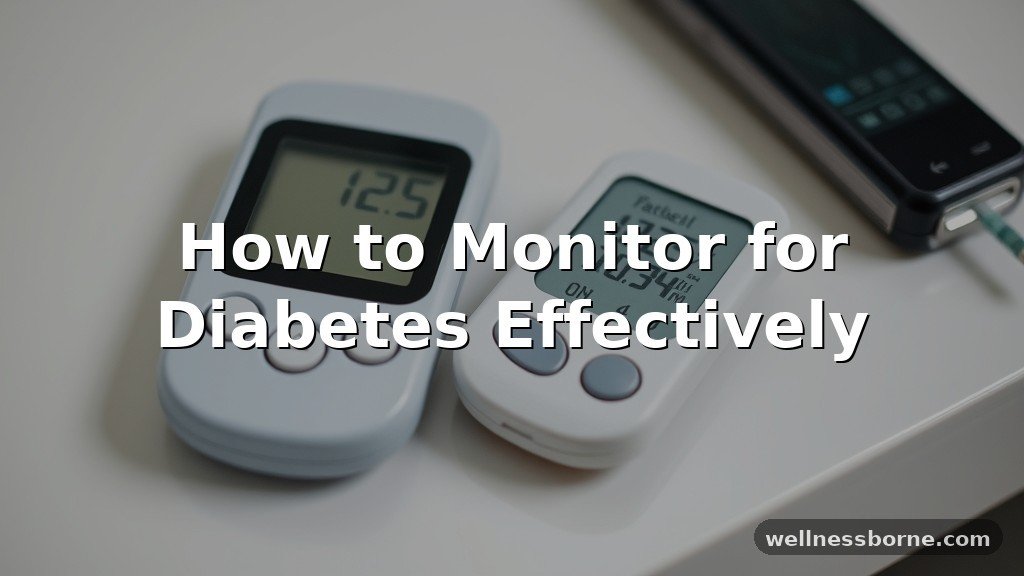
When you need to monitor for diabetes, the most important takeaway is that consistency in your testing schedule is far more critical than the specific brand of device you choose. Whether you are managing blood glucose levels to prevent long-term complications or tracking daily spikes, understanding your numbers provides the data necessary to adjust your diet and medication.
By learning how to monitor for diabetes properly, you gain the ability to spot trends that a single snapshot at a doctor’s office might miss entirely. This article explores the tools, techniques, and best practices for tracking your metabolic health safely and accurately.
The Primary Answer: What You Need to Know
If you are wondering if you can simply walk into a pharmacy and buy a device, the answer is yes. Most standard blood glucose meters are available over the counter, but you must ensure you have a compatible supply of test strips. A basic meter typically costs between $15 and $50, though the long-term expense lies in the recurring cost of test strips.
If you require a continuous glucose monitoring system, you will need a prescription from your healthcare provider to access the sensor technology. These systems, such as those produced by Dexcom, offer real-time data that traditional finger-prick meters cannot provide.
Understanding Standard Glucose Meters
A traditional blood glucose meter is the most common tool for those who need to monitor for diabetes on a budget. These devices function by analyzing a small drop of blood, usually obtained via a lancet prick on the fingertip.
The meter then provides a numerical reading in mg/dL, which tells you your current concentration of sugar in the bloodstream. Because these devices are portable and reliable, they remain the gold standard for many patients who do not require constant, round-the-clock tracking.
To get started, you must wash your hands thoroughly to avoid contamination from food residue or lotions. A tiny amount of sugar on your skin can lead to an artificially high reading, which might cause unnecessary alarm. Once your hands are dry, use the lancing device to get a sufficient drop of blood.
Apply this to the test strip inserted in your meter, and wait for the countdown to display your result. Always keep a log of these numbers, as they help your doctor determine if your current treatment plan is working as intended.
Continuous Glucose Monitoring Systems
Modern technology has introduced continuous glucose monitoring, or CGM systems, which have changed how people manage their health. Unlike a traditional meter that provides a single point-in-time snapshot, a CGM uses a sensor worn under the skin to track glucose levels throughout the day and night.
This constant flow of data allows you to see how specific meals, exercise sessions, and stress levels impact your body. It is particularly helpful for those who experience dangerous lows during the night.
The sensors are typically replaced every 7 to 14 days, depending on the manufacturer’s design. While they are more expensive than traditional meters, the insight they provide is often worth the investment for those with brittle or hard-to-control blood sugar.
You can view your current levels, as well as the direction and speed of your glucose trends, via a smartphone app or a dedicated receiver. This proactive approach helps you take corrective action before your levels reach a critical point.
The Role of Test Strips and Maintenance
The ongoing cost of your monitoring system is almost entirely tied to your test strips. Because each strip is designed for a single use, your monthly expenditure will depend on how frequently your physician recommends that you test.
Many insurance plans cover these items, but it is important to check your specific coverage before committing to a particular brand. Some meters are cheaper upfront but require more expensive, proprietary strips that can add up quickly over a calendar year.
Proper maintenance of your meter is also essential for accuracy. Never leave your strips in extreme temperatures, such as a hot car or a damp bathroom, as heat and moisture can degrade the chemical reagents.
Ensure your meter is kept clean and that you replace the batteries as soon as the low-power indicator flashes. If your readings seem erratic or inconsistent with how you feel, perform a control solution test to verify that the meter is still functioning within the manufacturer’s specified range.
Comparing Common Monitoring Technologies
When you decide which path to take, it helps to look at the differences between standard meters and advanced continuous systems. The following table provides a quick look at how these tools differ in terms of utility and typical user needs.
| Feature | Standard Meter | Continuous Monitor (CGM) |
|---|---|---|
| Testing Method | Finger prick | Subcutaneous sensor |
| Data Frequency | On-demand | Automatic (every 5 mins) |
| Primary Cost | Test strips | Sensors and transmitter |
| Best For | Occasional checks | Comprehensive trend analysis |
This comparison highlights why many people eventually transition to a CGM after starting with a traditional meter. While the initial learning curve is steeper, the ability to see trends rather than isolated numbers is a significant advantage. You should discuss these options with your endocrinologist to determine which level of data is necessary for your specific medical profile.
Interpreting Your Blood Glucose Numbers
Once you have your data, knowing what the numbers mean is the next step. A normal fasting blood glucose level for someone without diabetes is typically below 100 mg/dL.
If you are reading numbers consistently above 126 mg/dL while fasting, it is a strong indicator that you should consult a doctor immediately. Keep in mind that your target range can vary based on your age, the duration of your diagnosis, and other underlying health conditions.
You should also watch for trends rather than obsessing over a single high reading. A temporary spike after a heavy meal is normal, but a pattern of high readings over several days suggests that your medication or diet needs adjustment.
Keep a digital or paper log of your readings, including notes about what you ate or how active you were that day. This information is invaluable when you visit your medical team, as it turns raw data into a narrative about your daily life.
Lifestyle Factors That Influence Accuracy
Beyond the device itself, many external factors influence how you monitor for diabetes. Physical activity, for instance, can cause your blood sugar to drop significantly, sometimes hours after the exercise is finished.
Hydration also plays a major role; if you are dehydrated, your blood volume changes, which can lead to skewed test results. It is important to stay well-hydrated to ensure your blood samples are representative of your actual levels.
Stress is another major, often overlooked factor that can drive up your glucose readings. When you are stressed, your body releases cortisol, which signals the liver to release stored glucose into the bloodstream.
If you notice your numbers are high and you haven’t eaten anything out of the ordinary, look at your stress levels. Learning to manage these variables is part of the broader process of mastering your health, as detailed by the Centers for Disease Control and Prevention.
Essential Supplies for Your Toolkit
Successfully managing your blood sugar requires having the right supplies ready at all times. You should always keep a “go-bag” or a small kit with you, especially if you take insulin or other medications that can cause hypoglycemia. Having your supplies organized ensures that you won’t skip a test because you couldn’t find your strips or your lancing device.
* Reliable Meter: A device you trust and know how to operate.
* Fresh Test Strips: Always check the expiration date on the box.
* Lancing Device and Lancets: Change the lancet frequently to prevent skin irritation.
* Control Solution: Used to verify that your meter is reading accurately.
* Emergency Glucose: Fast-acting sugar, such as glucose tabs or juice, for lows.
* Logbook or App: A place to record and analyze your daily data.
Frequently Asked Questions
Is there a wearable monitor for type 2 diabetes?
Yes, many people with type 2 diabetes use continuous glucose monitors. While these were once reserved for type 1 patients, they are increasingly prescribed for anyone who requires detailed data to manage their insulin or medication effectively.
What is the best monitor to check blood sugar?
The “best” monitor is one that you will use consistently. Popular, reliable models like the Contour Next are highly regarded for their accuracy and ease of use. You should choose a device that is compatible with your insurance and fits your budget for test strips.
Can I just buy a glucose monitor without a prescription?
You can purchase most standard, non-continuous glucose meters over the counter at any local pharmacy. However, continuous monitoring systems almost always require a prescription from a doctor or a certified diabetes educator.
What should I do if my monitor gives me a strange result?
If you get a reading that seems impossible, such as an extremely high or low number that doesn’t match how you feel, wash your hands and test again. If the result remains abnormal, use your control solution to check the calibration or try a new test strip from a different vial.
How often should I monitor my levels?
The frequency depends entirely on your specific diagnosis and treatment plan. Some people test only once a day, while others need to check before every meal and before bed. Always follow the specific testing schedule provided by your healthcare team.
Final Thoughts on Consistent Monitoring
Taking control of your health requires a proactive approach to data collection and lifestyle management. Whether you choose a simple finger-stick meter or a high-tech sensor, the act of checking your levels provides the clarity needed to make informed decisions. Remember that your device is just one part of the equation; your diet, activity level, and stress management are equally important.
If you are just beginning to monitor for diabetes, start by building a simple routine that you can maintain easily over the long term. Consistent habits lead to better outcomes, so work closely with your medical team to find a system that fits your lifestyle. By staying engaged with your numbers, you empower yourself to live a healthier, more predictable life.
